
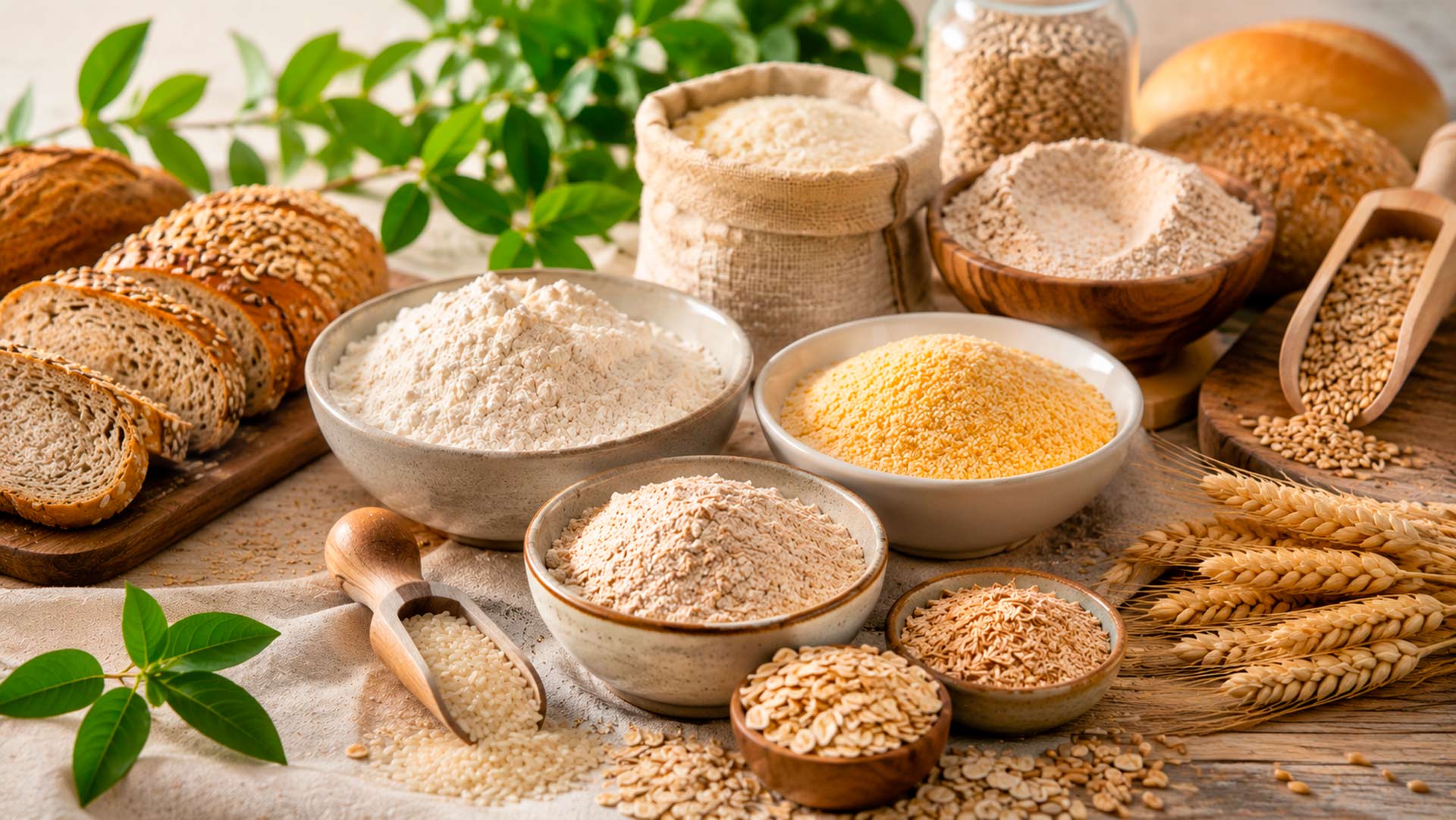
Corn semolina: benefits and applications in the food industry
The concept of “clean label” has been gaining increasing attention in the food industry. Driven by consumers who are increasingly attentive to food composition, this trend reflects a preference for products with simpler, recognisable ingredient lists associated with a perception of greater naturalness and transparency.
For manufacturers, the challenge lies in reformulating products without compromising texture, taste, stability or industrial performance. In this context, ingredients such as flours, semolinas, fibres and bran play a key role, offering important technological functionalities in a natural way.
What Does Clean Label Mean?
Although there is no universal legal definition, clean label is generally used to describe food products that feature:
• Short, easy-to-understand ingredient lists
• Reduced or no artificial additives
• Use of ingredients of natural origin
• Greater transparency in labelling
• Formulations aligned with modern consumer expectations
More than a marketing trend, clean label reflects a structural change in the way food products are developed and communicated to the market.
Why Is Clean Label Important for the Food Industry?
Consumers are increasingly looking for products that convey trust and authenticity. Unfamiliar technical terms or long ingredient lists can create negative perceptions, even when products are safe and technologically effective.
For this reason, many companies are investing in recipe reformulation, prioritising ingredients with natural technological functions that consumers recognise.
Natural Ingredients with Technological Functionality
Clean label reformulation does not mean compromising on performance. On the contrary, it requires in-depth knowledge of ingredient functionality.
Some of the most commonly used ingredients include:
Flours and Semolinas
Contribute to structure, texture, water absorption and stability.Fibres and Bran
Help enhance the nutritional profile while improving moisture retention and consistency.Alternative Cereals
Ingredients such as rice, oats and spelt respond to the demand for more distinctive and natural solutions.
Clean Label Applications Across Different Food Categories
The clean label concept applies to multiple segments of the food industry, including:
• Bakery and pastry
• Breakfast cereals
• Snacks and extruded products
• Gluten-free products
• Baby food
• Sauces, soups and prepared foods
• Brewing and beverages
Each application presents specific technical challenges, making the appropriate selection of ingredients essential.
The Role of Flours and Functional Ingredients
Cereal-derived ingredients can replace or complement more processed solutions, performing functions such as:
• Texture improvement
• Formula stabilisation
• Increased crispiness
• Moisture retention
• Extended freshness
• Nutritional enrichment
These characteristics make them particularly relevant in reformulation and innovation projects.
How Clean Label Projects Are Supported by the Better Foods Group
The Better Foods Group offers a wide range of flours, semolinas, bran and functional ingredients for the food industry.
Among the solutions most commonly used in clean label formulations are:
• Rice flours, with a neutral flavour and high versatility
• Corn semolinas, ideal for breakfast cereals and snacks
• Bran and fibres, which contribute to nutritional value
• Oat and spelt flours, valued for their nutritional profile
• Gluten-free blends and free-from solutions
In addition to supplying ingredients, the Better Foods Group works with its customers to develop solutions tailored to the specific requirements of each industrial application.
Clean Label as a Driver of Innovation
The clean label concept represents an opportunity to develop products that combine simplicity, technological performance and consumer-perceived value.
As this trend continues to consolidate, the selection of functional ingredients of natural origin is becoming increasingly strategic in the development of new products and the reformulation of existing recipes.
Ingredients for a More Transparent Future
The demand for simpler and more authentic products will continue to influence food innovation. Flours, semolinas and other cereal-derived ingredients offer a range of functionalities that can effectively and sustainably respond to these demands.
With expertise in milling and ingredient development, the Better Foods Group supports the food industry in creating products aligned with current trends and consumer expectations.
About the Better Foods Group
The Better Foods Group is Portugal’s largest milling group, producing high-quality cereal flours and food ingredients, with the important mission of supporting the foundations of Portuguese food and extending beyond its borders.
Established in 2018, the Group comprises four cereal milling plants processing different types of grains, a frozen food company specialising in the distribution of bakery and pastry products, and two logistics complexes responsible for distribution throughout Portugal, as well as in Galicia and Andalusia. It is therefore one of the most important B2B groups in Portugal’s food sector, dedicated to cereal processing and the production of everyday foods.

Leave a Reply